

Product Overview
- Your digital files are available for immediate download after checkout. Each file may be downloaded up to two (2) times using the link provided in your order confirmation. We strongly recommend saving your files to your device and creating a backup copy for future access. Lost files or files that are no longer available for download must be repurchased.
- We offer our digital downloadable materials under two license options:
- an Individual License for individual homeschoolers, and
- Extended License for schools, school districts, co-ops, and multi-family homeschool groups.
- School Districts must purchase the extended license option.
Choosing the correct license helps us keep pricing affordable while also preventing copyright misunderstandings.
Montessori Phonemic Awareness, Sound Segmentation, and Early Literacy
How many sounds are hidden inside a word—and can your child hear every one of them?
Before children can confidently decode and spell words, they need to understand that spoken language is made up of individual sounds, called phonemes.
The ETC Montessori Science of Reading: Phoneme Segmentation with Elkonin Boxes provides a concrete, picture-supported way for children to discover and explore those sounds.
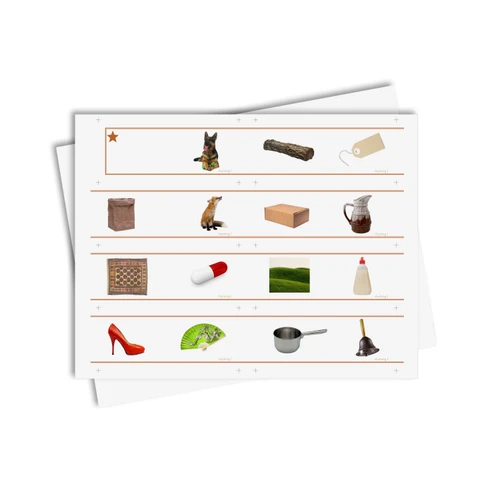
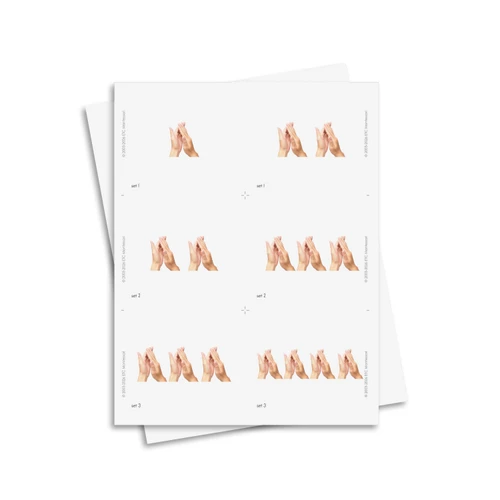
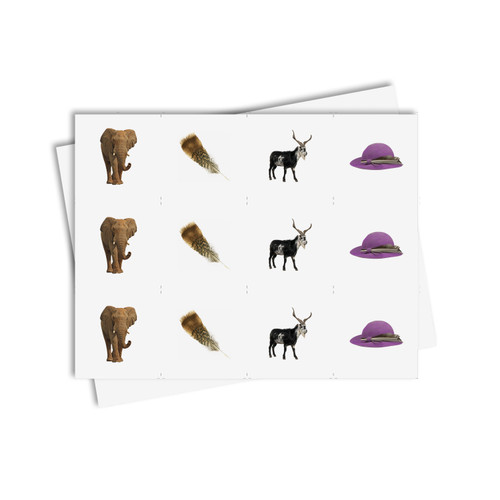
Designed for Montessori Early Childhood, kindergarten, and developing readers, this digital printable activity combines 15 picture cards with Elkonin sound box templates for two, three, and four phonemes.
Children identify a pictured object, say its name aloud, and move a marker into a box for each individual sound they hear.
Rather than simply memorizing letters or repeating words, children learn to listen carefully, isolate individual phonemes, and recognize how sounds combine to form meaningful words.
What Are Elkonin Boxes?
Elkonin boxes, also known as sound boxes, are a visual and tactile tool used to teach phoneme segmentation.
Each box represents one individual sound in a spoken word.
As a child slowly says a word, they move a small marker into a separate box for each sound they identify.
For example, consider the word fish:
/f/ – /i/ – /sh/
Although fish contains four letters, it has three phonemes. The letters sh work together to represent one sound.
A child using Elkonin boxes places three markers into three boxes, learning that the number of sounds in a word does not always match the number of letters used to spell it.
This concrete experience provides an important foundation for understanding the relationship between spoken and written language.
What Is Included in the Printable Material?
The four-page digital PDF includes:
15 Picture Cards
Carefully selected pictures represent familiar objects and words containing different numbers of phonemes.
Examples include:
-
Egg
-
Belt
-
Pie
-
Book ... and more
These pictures provide opportunities to investigate words with different sound structures.
Elkonin Box Templates
Printable sound box layouts are provided for:
-
Two-phoneme words
-
Three-phoneme words
-
Four-phoneme words
The different templates allow teachers and parents to select activities appropriate to each child's phonemic awareness and language development.
The picture cards and sound box templates are designed to be printed and prepared for repeated hands-on use.
Small counters, tokens, or other suitable manipulatives can be added to complete the activity. These physical counters are not included in the digital file.
How Does Phoneme Segmentation with Elkonin Boxes Work?
The activity follows a simple Montessori-inspired sequence that allows children to move from listening to physically representing individual speech sounds.
Step 1: Introduce a Picture
The guide or parent presents a picture and names the object clearly.
For example, the child sees a picture of a fish.
Step 2: Listen to the Word
The child repeats the word aloud, paying close attention to the sounds that make up the word.
Step 3: Identify the Individual Phonemes
The adult models slowly separating the word into its individual sounds:
/f/ – /i/ – /sh/
Step 4: Move a Marker for Each Sound
The child places one counter into an Elkonin box for each phoneme.
For fish, three boxes are used.
Step 5: Blend the Sounds Together
After identifying the individual sounds, the child says them together again to reconstruct the original word.
This final step connects phoneme segmentation with phoneme blending.
Step 6: Repeat with New Words
Children continue with additional picture cards, gradually working with words containing different numbers of sounds.
This progression builds confidence while helping children become more attentive to the sound structure of spoken language.
Why Is Phoneme Segmentation Important in the Science of Reading?
Phonemic awareness is the ability to recognize and manipulate individual sounds in spoken words.
It is a foundational component of early literacy development because children must understand the sound structure of words before they can reliably connect those sounds with written letters.
Phoneme segmentation specifically teaches children to break a spoken word into its individual phonemes.
This activity supports:
Phoneme Isolation: Recognizing individual speech sounds.
Phoneme Segmentation: Separating a spoken word into its individual sounds.
Phoneme Blending: Combining separate sounds to form a complete word.
Auditory Discrimination: Listening carefully to distinguish different sounds.
Sound Sequencing: Understanding that sounds occur in a particular order.
Preparation for Decoding: Developing the sound awareness children use when learning to read words.
Preparation for Encoding: Strengthening awareness of the sounds children will later represent with letters when spelling.
Because Elkonin boxes use markers to represent sounds, children can practice these skills without needing to recognize or write the corresponding letters.
This makes the activity especially valuable for children who are developing phonemic awareness before beginning more advanced phonics work.
Why Use Elkonin Boxes in Montessori Education?
Montessori education encourages children to develop abstract understanding through concrete experiences.
Elkonin boxes support this progression by transforming spoken sounds—something children hear but cannot physically see—into a visual and tactile learning experience.
As children move counters into individual boxes, they create a concrete representation of the sound structure of a word.
The activity encourages concentration, careful listening, purposeful movement, and repetition.
It can be introduced through an individual presentation and later made available for independent or guided follow-up work.
Teachers may begin with familiar, shorter words before introducing more complex sound patterns.
Phoneme Segmentation Is Not the Same as Syllable Segmentation
An important distinction in early reading instruction is the difference between counting syllables and identifying individual phonemes.
Syllables are larger units of spoken language.
Phonemes are the individual sounds within words.
For example, brush contains one syllable but four phonemes:
/b/ – /r/ – /u/ – /sh/
Using four Elkonin boxes helps children recognize that a single-syllable word may contain several distinct sounds.
This distinction is essential for accurately developing phonemic awareness and preparing for later spelling and reading activities.
A Practical Resource for Montessori Teachers and Homeschool Parents
For Montessori teachers, this printable material provides a focused activity for developing auditory discrimination and phonemic awareness.
It can be used during individual lessons, small-group instruction, language shelf work, and targeted foundational literacy practice.
For homeschool parents, the picture-supported activities offer an accessible way to help children listen to words and identify their individual sounds.
The activity requires only the printed cards, an appropriate Elkonin box template, and simple counters.
For early reading intervention, the material can provide additional guided practice for children who need to strengthen phoneme isolation, sequencing, segmentation, or blending.
RESOURCES
Look at the standards that are addressed with this material.