Product Overview
- Your digital files are available for immediate download after checkout. Each file may be downloaded up to two (2) times using the link provided in your order confirmation. We strongly recommend saving your files to your device and creating a backup copy for future access. Lost files or files that are no longer available for download must be repurchased.
- We offer our digital downloadable materials under two license options:
- an Individual License for individual homeschoolers, and
- Extended License for schools, school districts, co-ops, and multi-family homeschool groups.
- School Districts must purchase the extended license option.
Choosing the correct license helps us keep pricing affordable while also preventing copyright misunderstandings.
Montessori Letter-Sound Correspondence, Alphabet Recognition, and Early Phonics
A child may recognize the letter “a” and know the word “apple.” But do they understand why those two belong together?
One of the most important discoveries children make when learning to read is that written letters represent the sounds of spoken language.
This understanding is known as the alphabetic principle, and it provides a foundation for developing accurate reading and spelling skills.
The ETC Montessori Science of Reading: Alphabetic Principles material introduces this relationship through concrete, picture-supported activities that connect familiar objects with lowercase letters.
Designed for Montessori Early Childhood students, kindergarten learners, and children developing foundational literacy skills, this digital printable resource provides 26 picture-and-letter cards covering the lowercase alphabet, along with separate printable letter pieces.
Children observe a picture, identify the intended word, listen to its sounds, recognize the corresponding written letter, and practice matching the letter with its printed representation.
Through repeated exploration, they begin discovering that letters are not simply shapes to memorize. They are symbols used to represent the sounds of language.
What Is the Alphabetic Principle?
The alphabetic principle is the understanding that letters and letter combinations represent the individual sounds, or phonemes, of spoken words.
For example, the word apple begins with the short /a/ sound, represented by the letter a.
The word bag begins with /b/, represented by the letter b.
As children connect familiar spoken words with their written letters, they begin understanding how spoken language relates to print.
This awareness is essential for learning phonics, decoding unfamiliar words, and representing sounds when spelling.
What Is Included in the Alphabetic Principles Printable?
The nine-page digital PDF includes:
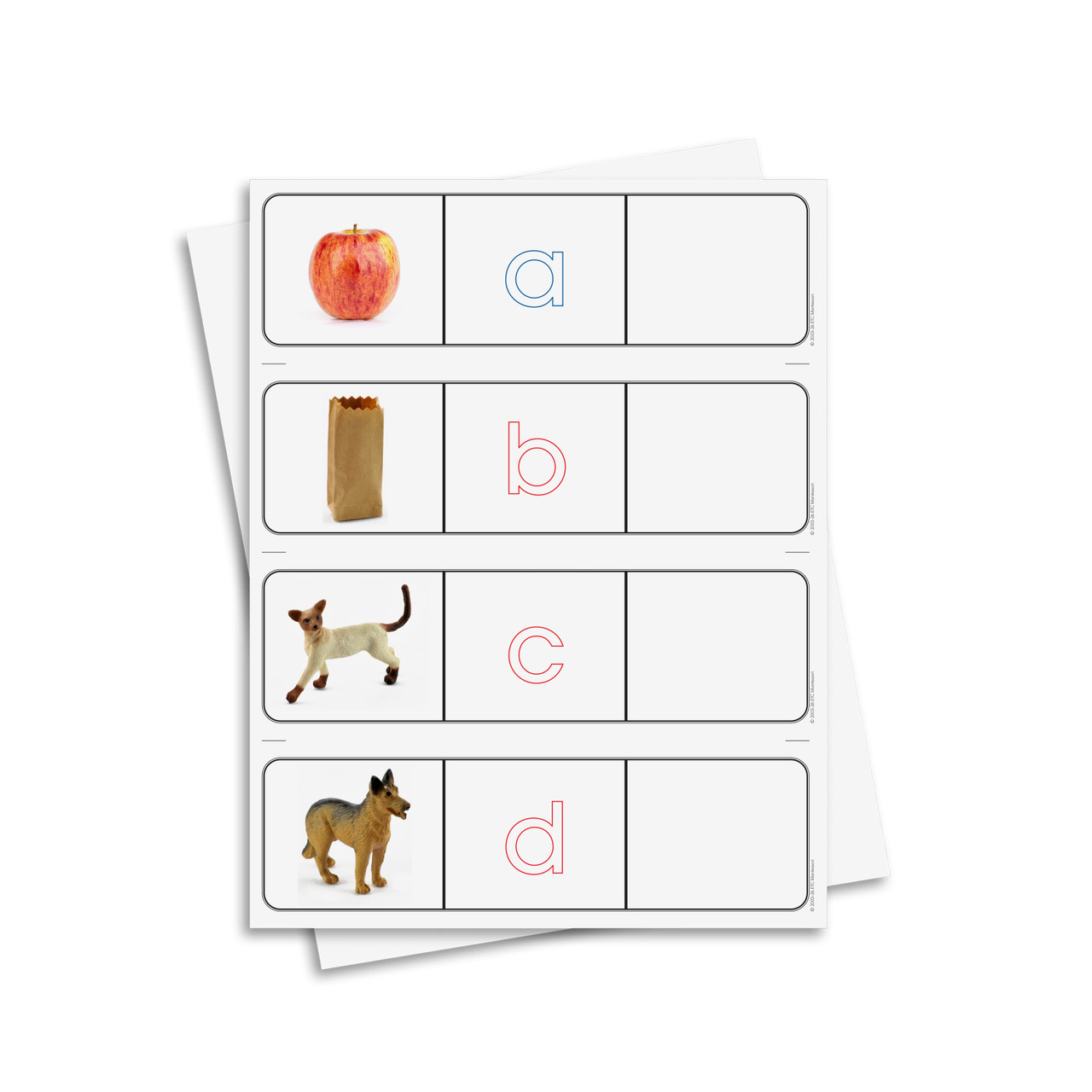
26 Picture-and-Letter Cards
The material introduces the 26 lowercase letters of the English alphabet.
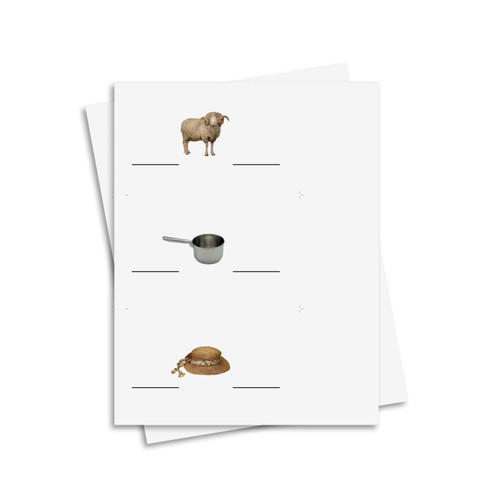
Each card contains three clearly defined sections:
-
Picture: A familiar object or animal that provides a meaningful language reference.
-
Lowercase Letter: An outlined letter that introduces its written form.
-
Blank Matching Space: An area that can be used for placing the corresponding movable letter or completing follow-up activities.
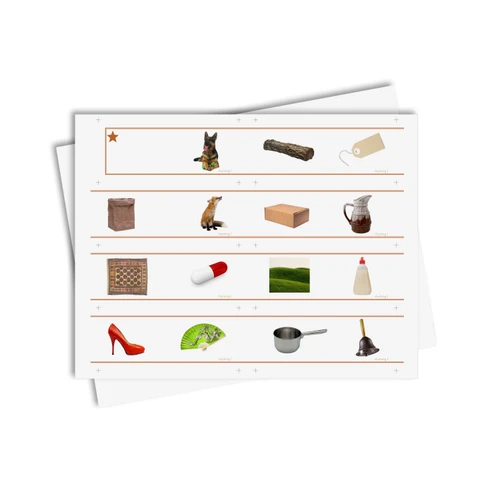
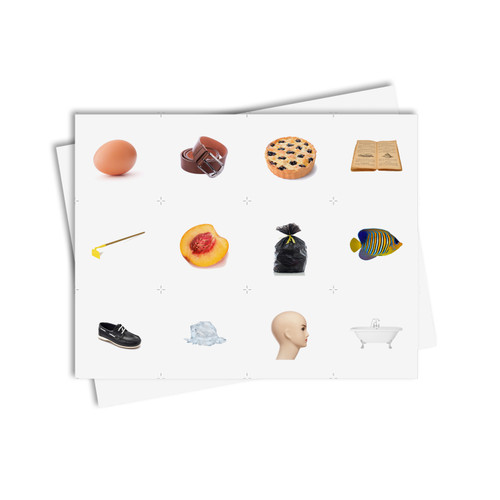
Pictures include familiar examples such as an apple, bag, cat, elephant, iguana, lion, octopus, pencil, rabbit, tiger, and zebra.
Most illustrations introduce a word beginning with the featured letter or sound. Selected letters, such as x, provide opportunities to explore sounds represented elsewhere in a word.
Printable Lowercase Letter Pieces
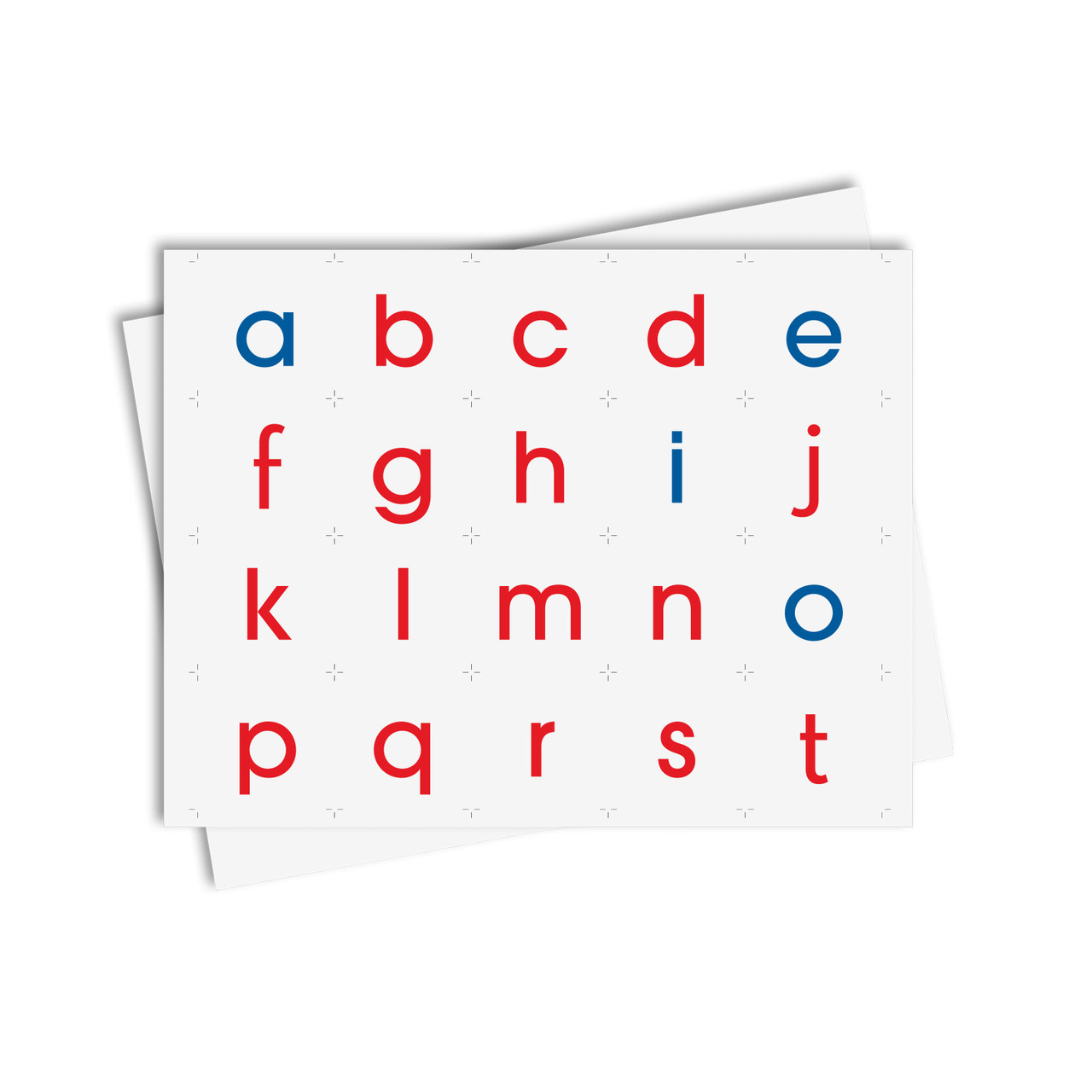
Two additional pages provide lowercase letters that can be cut apart and used for matching.
These pieces help children physically connect a printed letter with its corresponding representation on the picture card.
Montessori Color Coding
The vowels are presented in blue, while consonants appear in red.
This visual distinction is consistent with familiar Montessori language materials and helps children recognize the two letter categories during early phonics work.
How Does the Montessori Alphabetic Principles Activity Work?
This material can be introduced through a simple, carefully sequenced presentation.
Step 1: Introduce the Picture
The guide or parent selects a card and clearly names the pictured object.
For example, the child sees an apple.
Step 2: Listen to the Word
The child says apple aloud and listens for its beginning sound.
The guide encourages the child to identify the sound rather than simply repeat the name of the letter.
Step 3: Introduce the Written Letter
The child observes the outlined lowercase letter printed beside the picture.
The guide explains that the letter represents the sound identified in the spoken word.
Step 4: Match the Letter
The child selects the corresponding lowercase letter piece and places it in the blank section of the card.
This provides a concrete matching experience that reinforces letter recognition and sound-symbol relationships.
Step 5: Reinforce the Connection
The child can repeat the sound, observe the written letter, and compare it with the movable piece.
As a follow-up, the child may trace the outlined letter with a finger or identify another familiar word containing the same sound.
Step 6: Repeat With Additional Letters
The guide introduces new cards according to the child's readiness.
This gradual approach allows children to become familiar with letter forms and sound relationships before moving into more advanced phonics activities.
Why Is the Alphabetic Principle Important in the Science of Reading?
Research on reading development identifies knowledge of letter-sound relationships as an important component of learning to read.
Children need to understand that spoken words contain phonemes and that writing uses letters and letter combinations to represent those sounds.
This activity brings together two foundational areas of literacy:
Phonemic Awareness: Hearing and identifying individual sounds in spoken language.
Phonics: Understanding the relationships between speech sounds and written letters.
By combining realistic pictures, spoken language, printed letters, and matching pieces, children can begin making the connection between what they hear and what they see.
The material supports:
Letter-Sound Correspondence: Associating familiar speech sounds with written lowercase letters.
Alphabet Recognition: Recognizing the visual forms of the 26 lowercase letters.
Initial Sound Identification: Listening for beginning sounds in familiar words.
Visual Discrimination: Distinguishing individual letter shapes.
Auditory Discrimination: Listening carefully to identify differences between speech sounds.
Letter Matching: Connecting a printed letter with another representation of the same letter.
Reading Readiness: Building knowledge needed for later blending, decoding, and spelling activities.
The goal is to help children understand how letters function within written language, not simply memorize the alphabet in order.
Why Use This Material in Montessori Education?
Montessori language education follows a progression from concrete experiences toward abstract understanding.
Children begin with spoken language and familiar objects before gradually exploring the written symbols used to represent sounds.
The Alphabetic Principles activity supports this progression by connecting recognizable pictures with lowercase letters.
The three-section card format encourages observation, comparison, matching, and repetition.
Children can work with one letter at a time, allowing the guide to select appropriate presentations based on each child's readiness.
The separate letter pieces also provide opportunities for purposeful movement and hands-on learning.
Used alongside Sandpaper Letters, oral sound games, and other Montessori language materials, these cards help reinforce the relationship between spoken sounds and their written representations.
A Practical Resource for Montessori Teachers and Homeschool Parents
For Montessori teachers, the Alphabetic Principles cards provide structured follow-up work after introductory sound and letter presentations.
The cards can be incorporated into language shelves, individual lessons, small-group instruction, and independent matching activities.
For homeschool parents, the resource offers a practical way to introduce lowercase letters while helping children understand how they relate to familiar spoken words.
Parents can introduce a few letters at a time and revisit them as needed, allowing children to develop confidence through meaningful repetition.
For educators supporting developing readers, the material provides opportunities for additional guided practice with letter identification, sound recognition, and sound-symbol correspondence.
How Does This Material Fit Into the Early Reading Sequence?
The Alphabetic Principles material can be introduced after children have begun exploring spoken sounds through oral language games and picture-based sound recognition.
It also provides a foundation for activities requiring children to independently identify and select letters.
A useful learning progression is:
Hear a sound → Recognize the corresponding letter → Match the letter → Identify letters in new words → Begin blending and building words.
This progression helps children connect their knowledge of spoken language with the printed symbols they will use when learning to read and write.
RESOURCES
Look at the standards that are addressed with this material.