

Product Overview
- Your digital files are available for immediate download after checkout. Each file may be downloaded up to two (2) times using the link provided in your order confirmation. We strongly recommend saving your files to your device and creating a backup copy for future access. Lost files or files that are no longer available for download must be repurchased.
- We offer our digital downloadable materials under two license options:
- an Individual License for individual homeschoolers, and
- Extended License for schools, school districts, co-ops, and multi-family homeschool groups.
- School Districts must purchase the extended license option.
Choosing the correct license helps us keep pricing affordable while also preventing copyright misunderstandings.
Montessori Phoneme Manipulation, CVC Word Building, and Early Phonics
What happens when a child discovers that changing just one sound can create an entirely new word?
The difference between pat, cat, rat, and hat is only one beginning sound. Yet recognizing and manipulating that single sound represents an important step in learning how written language works.
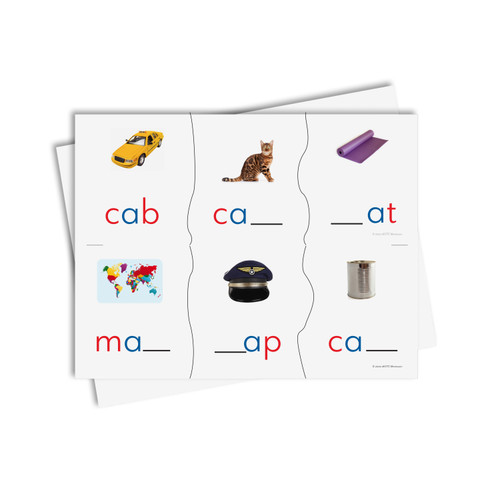
The ETC Montessori Science of Reading: Initial Letter Substitution Kit A provides children with a concrete, picture-supported way to explore this relationship.
Designed for Montessori Early Childhood students, kindergarten learners, and children developing foundational reading skills, this printable activity helps students remove and replace the initial sound and letter of a word while keeping the remaining sounds unchanged.
By combining spoken sounds, familiar pictures, and movable lowercase letters, children discover how simple changes in a word's beginning can create new words with different meanings.
What Is Initial Sound Substitution?
Initial sound substitution is the ability to change the first phoneme, or individual speech sound, in a word to create another word.
For example, beginning with the word pat, a child removes the /p/ sound and replaces it with /c/ to form cat.
The ending sound pattern, -at, stays the same. Only the beginning sound changes.
This activity helps children recognize that words are made up of individual sounds that can be separated, replaced, and recombined.
When children connect those spoken sounds with the printed letters provided in the activity, they also strengthen phonics skills and their understanding of the alphabetic principle.
What Is Included in Initial Letter Substitution Kit A?
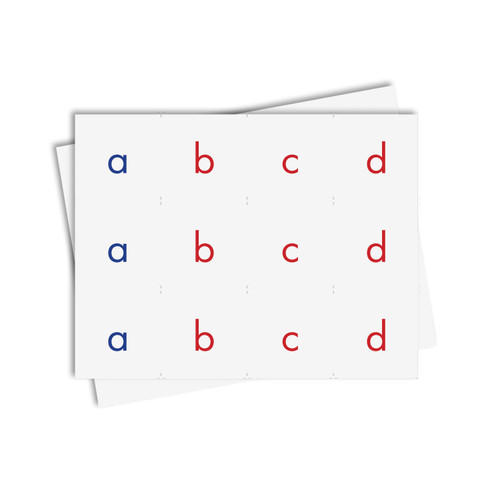
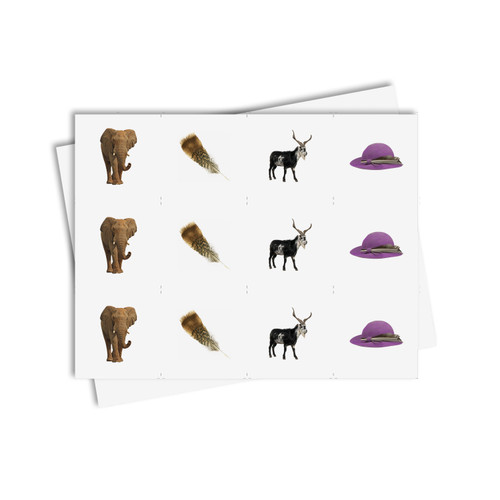
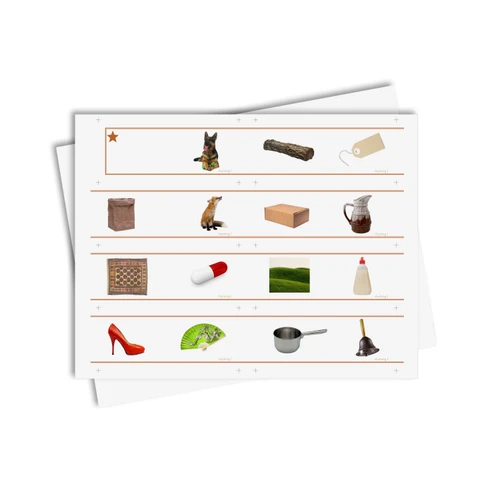
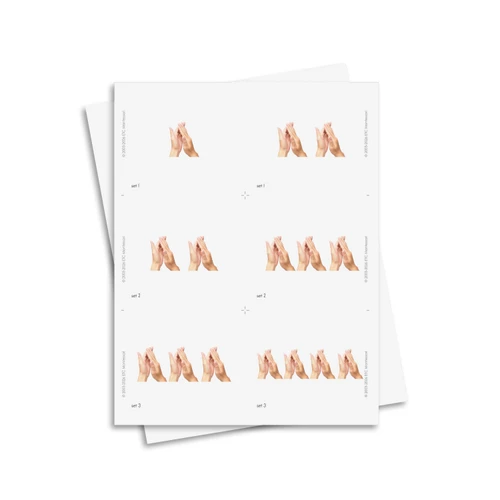
The seven-page digital printable contains five short-vowel word groups, picture-supported activities, movable letter pieces, and a reference page identifying the letters used in each group.
The five word families include:
-
Short a – at: Beginning with pat, children create new words such as cat, rat, hat, mat, and bat.
-
Short i – ig: Beginning with big, children explore words such as pig, jig, dig, fig, and wig.
-
Short e – et: Beginning with wet, children discover net, jet, pet, vet, and met.
-
Short o – og: Beginning with cog, children form words such as fog, dog, log, hog, and jog.
-
Short u – un: Beginning with fun, children explore run, nun, bun, gun, and sun.
Each word group begins with a completed example and provides five additional picture-supported opportunities to substitute the beginning letter.
The material contains 30 illustrated word examples across five short-vowel groups, including 25 opportunities to complete new words.
An additional sheet of lowercase letters is provided for preparing the matching activity.
How Does the Initial Letter Substitution Activity Work?
The activity uses a straightforward Montessori progression that encourages children to listen, observe, manipulate, and discover.
Step 1: Introduce the Starting Word
The guide or parent presents a completed word, such as pat, and invites the child to say it aloud.
The child listens to the beginning sound and identifies the remaining sound pattern.
Step 2: Observe the Next Picture
The child examines another picture from the same word group and names what it represents.
For example, the picture of a cat provides the spoken word cat.
Step 3: Identify the New Beginning Sound
The child compares pat and cat, recognizing that the final sounds remain the same while the first sound changes.
Step 4: Substitute the Initial Letter
Using the provided lowercase letter pieces, the child selects the letter that represents the new beginning sound and places it before the unchanged ending pattern.
The result is a new word.
Step 5: Repeat and Explore
Children continue with the remaining pictures, replacing only the beginning letter and discovering how the meaning changes.
This process helps make sound manipulation visible and tactile while reinforcing the relationship between spoken and written language.
How Does This Activity Support the Science of Reading?
Research on early literacy identifies phonemic awareness and knowledge of letter-sound relationships as important foundations for accurate word reading and spelling.
Phonemic awareness involves recognizing and manipulating individual sounds in spoken language.
Phonics connects those sounds with the letters used to represent them.
Initial Letter Substitution Kit A brings these two areas together.
Children first listen to words and identify the sound that changes. They then use printed letters to represent that change.
Because the remaining letter pattern stays visible, students can concentrate on the relationship between the new beginning sound and the resulting word.
The activity provides practice with:
-
Phoneme isolation: Identifying the first sound in a word.
-
Phoneme substitution: Replacing one beginning sound with another.
-
Phoneme blending: Combining the new beginning sound with the remaining sounds.
-
Letter-sound correspondence: Matching spoken sounds with written lowercase letters.
-
CVC word recognition: Exploring simple consonant-vowel-consonant words.
-
Word-family patterns: Recognizing that several words can share the same ending sounds and spelling pattern.
These skills help prepare children for decoding unfamiliar words and representing spoken words in writing.
Why Is This Material Effective in Montessori Education?
Montessori language education follows a progression from listening and speaking toward recognizing sounds, connecting sounds with symbols, and building words.
Initial Letter Substitution Kit A is particularly useful for children who can already identify beginning sounds and recognize the corresponding lowercase letters.
The activity gives children an opportunity to move beyond identifying individual sounds and begin manipulating those sounds to produce meaningful words.
The printable format encourages purposeful movement, visual observation, concentration, and repetition.
Rather than completing an entire worksheet through passive memorization, children actively select and place letters to investigate how words change.
The colored letter representations also help children visually distinguish the vowel from the consonants while exploring simple word structures.
A Practical Resource for Teachers and Homeschool Parents
For Montessori teachers, this material provides a focused follow-up activity after lessons on initial sounds, Sandpaper Letters, movable letters, and introductory phonetic reading.
It can be used for individual presentations, language shelf work, small-group instruction, and targeted foundational literacy practice.
For homeschool parents, it provides a structured activity for helping children understand how replacing one sound and letter changes a word.
Parents can begin with oral sound substitution before introducing the movable letters, allowing children to become familiar with the sounds before working with their printed representations.
For educators supporting children who need additional practice with beginning sounds or simple CVC words, the kit offers a manageable activity focused on one skill at a time.
Where Does Kit A Fit in the Reading Sequence?
This activity is most appropriate after a child has developed some ability to hear beginning sounds and connect those sounds with lowercase letters.
A useful learning progression is:
Recognize beginning sounds → Match sounds with letters → Substitute beginning sounds → Build and decode new words.
Initial Letter Substitution Kit A supports the transition from sound identification toward phoneme manipulation and word building.
RESOURCES
Look at the standards that are addressed with this material.