
Product Overview
- No Lamination Required.
- Printed on Premium Thick Plastic and Cut.
- This material is ready to start using. No other prep work is needed.
This complete set of materials is part of the Elementary I Curriculum Solution - Geometry section.
It is being offered as an alternative option for those schools who wish to update just their lower elementary language section.
Because nothing needs laminating or trimming, the package removes weeks of prep time and eliminates the hidden costs of piecemeal sourcing, letting teachers focus on observation and individualized follow-up instead of production logistics. In short, this curriculum solution transforms a classroom setup from a patchwork of purchases into a turnkey investment that safeguards instructional time, assures standards coverage, and delivers a cohesive Montessori experience the moment it arrives.
Geometry feels most powerful in the Montessori classroom when children can name what they see, classify what they know, and prove what they think—all through hands-on, self-paced work. This collection brings those pieces together in a clear sequence: students build precise vocabulary with classified nomenclature, strengthen visual discrimination and reasoning with attribute investigations, then move into structured task-card work that takes them from first presentations all the way into the thinking skills that support geometric proof and deduction.
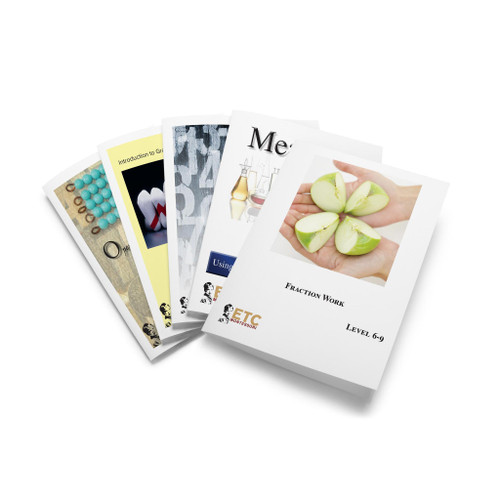
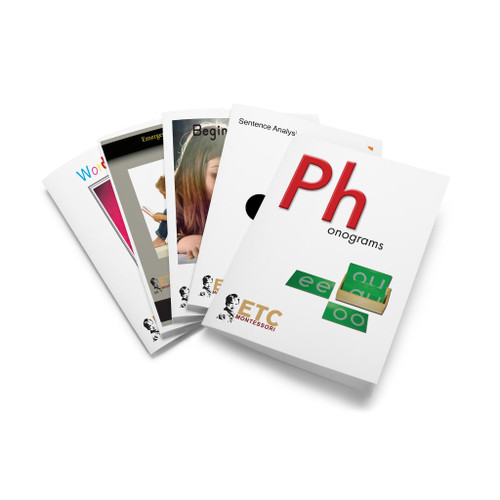
Most materials in this set are printed on premium thick plastic and come cut—no lamination required, so everything arrives ready to use and durable enough for daily classroom handling.
Quick “teacher answer”
-
Level: Lower Elementary (Grades 1–3 / ages 6–9)
-
Focus: Geometry vocabulary + classification + task-based follow-up work + analytical thinking
-
Standards: The concepts presented in the related ETC geometry bundle are noted as meeting NCTM standards
-
Format: Thick plastic, cut, classroom-ready (no lamination)
What’s included
1) Geometry Nomenclature 6–9 – Complete Set (ELC-3043)
A complete, color-coded classified nomenclature system that supports lower elementary and is reviewed in upper elementary. It covers the essential language of geometry—lines, angles, triangles, quadrilaterals, polygons, circles, and more—with 36 concepts, all corresponding control charts, and over 520 pictures. Booklets are printed on plastic, cut, and bound for easy use and long life.
Why it matters: children gain accurate terminology and visual classification skills—exactly what they need before they can describe relationships, compare shapes, and justify conclusions.
2) Lower Elementary Attribute Work with Task Cards (ELC-3015)
A sequential curriculum for Grades 1–3 that helps students understand attributes and properties, while building logical thinking through set theory, patterning, and deductive reasoning. It’s intentionally designed to supplement an elementary Montessori geometry curriculum and is appropriate for Montessori classrooms, homeschools, or as a strong supplement in traditional classrooms.
Suggested support materials: Attribute Blocks and the Attribute Block Template are recommended for the work.
3) 1st Level Geometry Task Cards (ELC-3061)
A complete first-level presentation support set that includes:
-
Color-coded labels
-
Etymology for the geometric cabinet, constructive triangles, and solids
-
“What am I?” cards for solids
-
Command cards for the geometric cabinet and constructive triangles
-
Blue triangles (pre-cut)
This set is designed to work with the Seven Triangles of Reality Chart (sold separately).
Why it matters: first-level geometry becomes smoother and more consistent—children get clear language, strong sequencing, and purposeful commands that guide independent practice.
4) Seven Triangles of Reality Chart (ELC-3061C)
An 18" x 18" matrix chart that helps children classify the “seven triangles of reality” by angles and side lengths. It’s designed to fit well with the geometric cabinet and is made from durable synthetic material that won’t tear, making it easy to roll and store.
Why it matters: triangle classification can feel abstract until children can see the system. This chart makes the relationships visible and supports first-level geometry lessons.
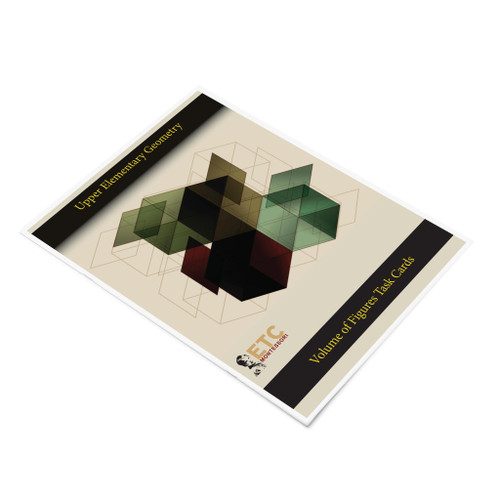
5) 2nd & 3rd Level Geometry Task Cards (ELC-3063)
A structured set of follow-up task cards and sorting activities designed to extend learning after box of sticks and classified nomenclature presentations. It helps students move from basic ideas into more advanced concepts across:
-
Lines, angles, triangles, quadrilaterals, polygons, circles
-
Congruency, similarity, equivalency
-
Sorting activities (positions of lines, types of triangles, types of angles)
The approach explicitly supports deeper analysis by teaching students to break down complex ideas—an important foundation when students later encounter geometric proofs and deductions.
How the set works together (a practical classroom flow)
-
Start with vocabulary and classification using the Geometry Nomenclature (ELC-3043).
-
Strengthen logic and attribute thinking with Attribute Work (ELC-3015), using concrete manipulatives and pattern/set investigations.
-
Run first-level geometry presentations and independent practice using the 1st Level Task Cards (ELC-3061), supported by the Seven Triangles chart (ELC-3061C).
-
Extend into second/third-level thinking with ELC-3063 as children are ready for deeper classification, analysis, and early proof-style reasoning.
This structure supports multiple learning styles: visual learners benefit from the classified charts and control materials, tactile learners gain from sorting and hands-on work, and analytical learners thrive with the “break it down” approach that prepares them for real reasoning.
STANDARDS
To view the standards met by this classroom please follow the individual links for each item.