
Product Overview
- Immediate download of the file after checkout
- We offer our digital downloadable materials under two license options:
- an Individual License for individual homeschoolers, and
- Extended License for schools, co-ops, and multi-family homeschool groups.
Choosing the correct license helps us keep pricing affordable while also preventing copyright misunderstandings.
78 Pages
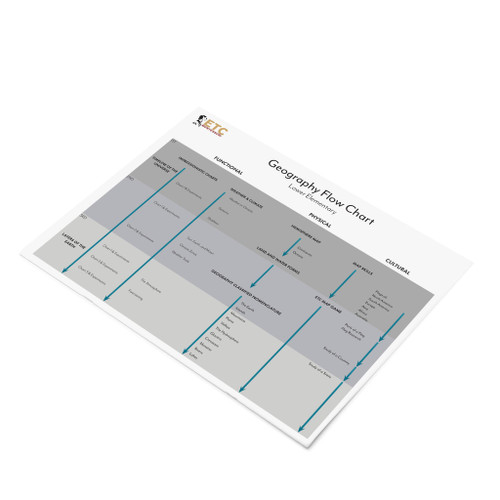
The Montessori Lower Elementary Homeschool Plan & Completion Milestone Charts is an indispensable planning and recordkeeping companion for families and educators working with children ages 6–9. Designed to support the full lower elementary cycle, this resource transforms the ETC Montessori flow charts into a practical, usable homeschool roadmap—one that honors the Montessori sequence while allowing each child to progress with confidence, independence, and joy.
The lower elementary years are a time of tremendous growth. Children are moving from concrete experience toward abstraction, from isolated lessons toward meaningful connections, and from adult-led work toward greater responsibility. This document gives homeschool parents and teachers the structure they need to support that growth without turning Montessori into a race, a worksheet program, or a disconnected collection of activities. It explains how to use the flow charts as maps, while providing the “travel notes” needed to bring each subject area to life in the home or classroom.
At its heart, this product helps adults understand the purpose behind the sequence. The guide explains how Mathematics develops from quantity to abstraction, how Language moves from oral grammar to sentence analysis and writing, how Geometry strengthens precision and reasoning, how History helps the child understand time and human development, how Geography connects the child to the Earth and its cultures, and how Science builds observation, classification, experimentation, and ecological awareness. Rather than presenting these as separate subjects, the document shows how the Montessori curriculum naturally braids them together into a unified course of study.
What makes this resource especially valuable is its built-in system for tracking progress. The included completion milestone charts allow parents, teachers, and students to mark when a lesson has been presented, when the child has repeated the work, and when mastery is demonstrated. This simple but powerful structure helps everyone become an active participant in the child’s learning. Adults can see what has been introduced and what needs review. Students can take pride in their progress. Parents can document authentic growth through notebooks, maps, charts, timelines, science records, writing samples, and portfolio evidence.
The check-off charts are detailed enough to mirror the lower elementary sequence across all major curriculum areas. They include year-level dashboards for first, second, and third level; math charts for operations, facts, fractions, money, probability, advanced number patterns, and abstraction; language charts for grammar, analysis, and writing; geometry charts for classic curriculum, attributes, and graphing; history charts for time, timelines, and fundamental needs; geography charts for functional, physical, and cultural geography; and science charts for measurement, physical science, chemistry, life science, botany, and ecology.
This is more than a planner. It is a bridge between the adult, the child, and the Montessori materials. It gives homeschool families a way to stay faithful to the Montessori progression while adapting pace, review, repetition, and follow-up to the needs of the child in front of them. It helps prevent the common homeschool problem of either moving too quickly through lessons or losing track of the larger sequence. With this guide, the flow charts become easier to understand, easier to implement, and easier to document.
The document also includes practical guidance for setting up the prepared home environment, planning the daily and weekly rhythm, observing the child, assessing mastery, organizing materials, holding student conferences, and adapting Montessori work for different homeschool realities. Families with a full Montessori material collection will find it useful for sequencing and recordkeeping, while families with fewer materials will appreciate the explanations of purpose, follow-up, and meaningful documentation.
For teachers, this resource can serve as a planning companion, parent communication tool, progress tracker, and portfolio guide. For homeschool parents, it offers reassurance and direction. For students, it creates visible milestones that encourage ownership, reflection, and responsibility. Together, the adult and child can see not just what has been “covered,” but what has been experienced, repeated, understood, recorded, and applied.
What’s Included
This comprehensive resource includes:
- A complete lower elementary Montessori homeschool framework for ages 6–9.
- Guidance for using the ETC Montessori flow charts as living curriculum maps.
- Subject-by-subject explanations for Geography, Geometry, History, Language, Mathematics, and Science.
- A three-year overview for first, second, and third level lower elementary work.
- Month-by-month integrated planning guidance.
- Practical support for setting up shelves, organizing materials, planning work cycles, and keeping records.
- Detailed completion milestone charts using a Presentation, Work, and Mastery format.
- Portfolio evidence suggestions for documenting authentic progress.
- Weekly work plan templates.
- Conference and observation charts to keep the child actively involved in reflection and planning.
- Built-in support for parent observation, student accountability, and long-term recordkeeping.
Key Benefits
Turns the flow charts into an actionable plan
The ETC Montessori flow charts provide the sequence. This companion explains how to use that sequence in a real homeschool or classroom setting, giving parents and teachers the confidence to move forward with purpose.
Supports the full three-year lower elementary cycle
Rather than focusing on isolated lessons, the document helps families see the complete arc of lower elementary development from first-level concrete foundations to third-level abstraction, synthesis, and responsibility.
Encourages student ownership
The completion charts make progress visible. Students can participate in tracking their work, reflecting on what they have practiced, and preparing for what comes next.
Keeps adults organized without overwhelming the child
The charts help parents and teachers know what has been presented, what needs repetition, and what is ready for mastery—without reducing Montessori work to a race through boxes.
Connects lessons to portfolio evidence
Each milestone encourages meaningful documentation through notebooks, material photos, written explanations, maps, graphs, timelines, research pages, science records, and polished writing.
Balances all major curriculum areas
The resource helps ensure that Math, Language, Geometry, History, Geography, and Science all receive attention across the year, while still honoring the Montessori principle of integration.
Strengthens communication between teacher, parent, and child
Whether used in a homeschool, tutoring setting, co-op, or Montessori classroom, the recordkeeping system creates a shared language for discussing progress.